The speeds part of the question comes down to more than the plug. At home, the rate is not set by the connector alone.
The charger, the vehicle and the house supply
Three things shape how a car charges at home. The first is the charger or cord. The second is the car, because each car limits how it accepts charge. The third is the house supply, including the switchboard and the circuit that feeds the charger.
This guide does not give power figures or charging times, because they change from car to car and house to house. Your electrician will look at all three during a site check and explain what you can expect in plain terms.
The charging cable run and access
Home charging points need a safe place on the wall and a clear path for the cable that feeds them. The installer checks how far the parking space is from the switchboard, how the cable can run between them, and where the charger can sit so the charging cable reaches the car without stretching across a path.
Readers should never install the unit, run cable or open the switchboard. Those steps are electrical work for a qualified electrician.
Why an electrician should confirm the fit
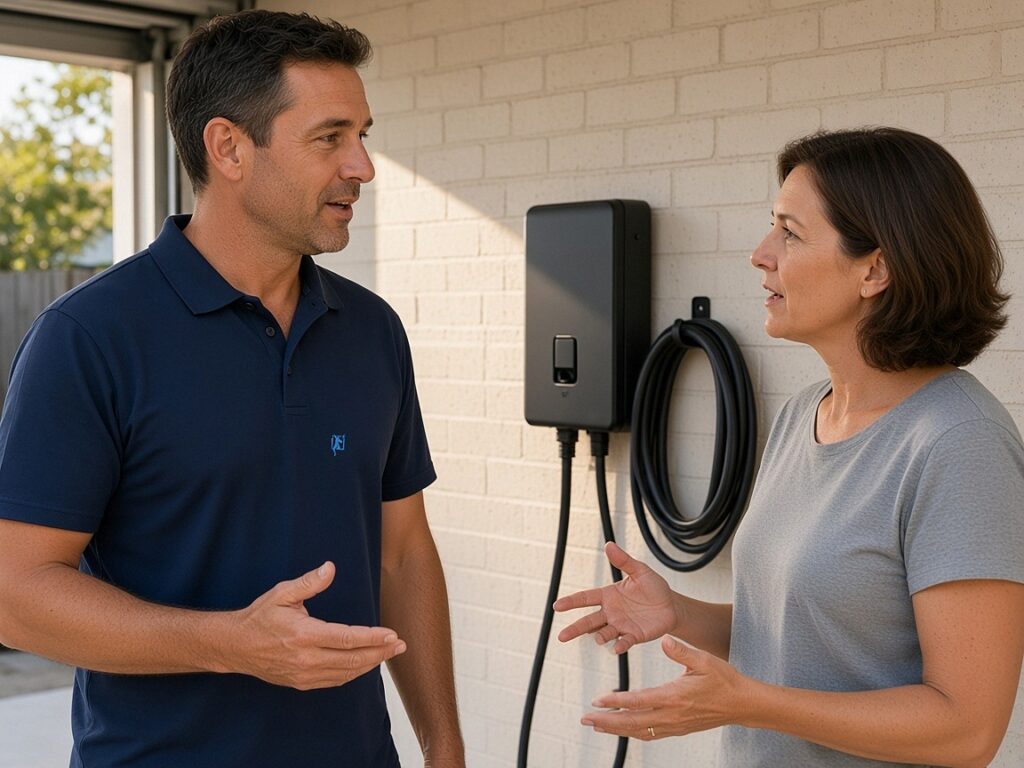
An electrician checks that the charger, the connector, the cable and the house supply all work together. They install the unit, connect it to the switchboard and test it before you use it. Older homes may need checks before work starts.
Leave the charger, the cable and the wiring alone. If a charger, connector or power point looks damaged, feels hot or smells like burning, stop charging, switch off at the wall if it is safe to do so, unplug the car if you can do so safely, and call an electrician. Smoke or fire means 000 first.
Types, the Installer and the Next Step
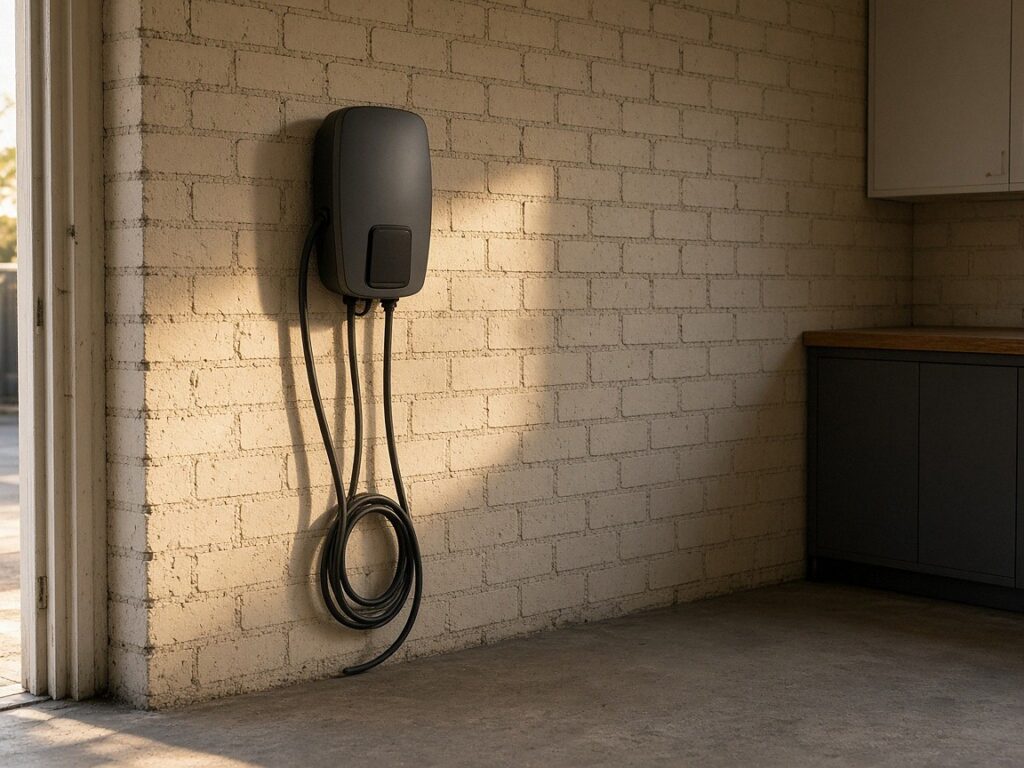
Connectors are only one part of the picture. The charger itself also comes in different forms, such as a portable cord or a fixed wall unit. For a guide to those options, read about the types of EV chargers.
When you are ready to plan the job, it helps to know what the installer will look at. Read about what an EV charger installer in Sydney checks during a site visit.
The cost depends on the charger unit, the length of the cable run, the access between the switchboard and the parking space, and if the switchboard needs work. Your electrician will confirm the price for your job. Call us for a free quote.
Frequently Asked Questions
What are the main EV charging connector types and speeds in Australia?
Many homes use a Type 2 connector at a home charging point. Public charging stations often use CCS2. Charging rate still depends on the vehicle, the charger and the house supply, and this guide does not give figures.
Do charging cables all use the same connector?
No. Different types of charging cables suit different charging points. An electrician can confirm the cable and the connector that suit your car and your home.
Can I change a connector myself?
No. Charger installation and the charging cable run are electrical work. Leave the unit and the wiring alone, and ask a qualified electrician to confirm the fit.
Does a CCS2 connector work at home?
CCS2 is the usual Australian public DC connector. Home charging often uses a Type 2 connector instead. An electrician can confirm what suits your vehicle and your house.
Is there a set price to fit a home charging point?
No. The cost depends on the unit, the run, the access and if the switchboard needs work. Ask for a quote after a site check.
Talk to Charlie Sparks About a Home EV Charger
Charlie Sparks is a Condell Park solar and electrical company helping homes in Bankstown, Yagoona, Georges Hall, Panania and across greater Sydney. Sydney’s Trusted Solar Installers with Solar Accreditation (SAA) for safe, quality, and on-time solar and electrical solutions. Serving New South Wales residents, businesses, and strata estates for over a decade.
Call us for a free quote.
Call Charlie Sparks on (02) 8310 4077. We are open Monday to Saturday, 7am to 6pm. Closed Sunday. You can also contact Charlie Sparks online.