
Electric vehicles are becoming increasingly common across Australia, and many homeowners are asking the same question: how many solar panels does it take to charge a Tesla? In most cases, between 5 and 8 solar panels can generate enough energy to cover the daily charging needs of a Tesla driven about 50 km per day in New South Wales. The exact number depends on the Tesla model, your driving habits, and the solar output of your system.
For households in NSW with strong sunshine throughout the year, pairing rooftop solar with a Tesla can significantly reduce electricity costs while lowering emissions. With the right system design, solar panels can power both your home and your electric vehicle efficiently.
This guide is based on practical solar system design experience across New South Wales. Our team regularly designs rooftop solar systems for homeowners who want to charge electric vehicles such as Tesla models while powering their homes. The calculations and panel estimates provided here reflect real installation data and average solar production levels commonly seen across NSW.
Understanding Tesla Energy Needs
Before calculating the number of solar panels required, it is important to understand how much electricity a Tesla consumes.
Battery Size by Tesla Model
Each Tesla model has a different battery capacity, which affects how much energy is required to charge it.
Typical capacities include:
- Model 3 Standard Range: about 50 kWh
- Model 3 Long Range or Performance: about 75 kWh
- Model Y: about 75 kWh
- Model S: about 100 kWh
- Model X: about 100 kWh
A larger battery means more energy is needed for a full charge. However, most drivers rarely charge from zero to 100 percent every day.
Daily Driving Habits
Energy consumption depends mainly on how far you drive. On average, Tesla vehicles use 15 to 20 kWh per 100 km.
These figures are based on typical efficiency data published by Tesla and independent EV energy consumption studies conducted in Australia.
For example:
- Driving 50 km per day uses roughly 8 to 10 kWh
- Driving 80 km per day uses around 12 to 16 kWh
For many NSW commuters, daily driving distances fall within this range, making solar charging practical.
Charging Efficiency
Charging an EV at Home?
Our licensed team can size a solar system that keeps your car charged and your bills down. Talk to Charlie Sparks.
Charging an electric vehicle is not perfectly efficient. Some energy is lost during the conversion process between solar generation, the inverter, and the charging system.
Most home EV charging systems operate at 85 to 90 percent efficiency. That means if your Tesla requires 10 kWh of energy, your solar system may need to generate around 11 to 12 kWh to supply that amount.
Solar Panel Output in NSW
Solar production varies depending on panel efficiency, system orientation, shading, and weather conditions. Fortunately, New South Wales receives strong solar radiation throughout the year.
Modern residential solar panels usually have a capacity of 300 to 400 watts per panel.
Under NSW conditions, a typical panel can generate approximately 1.5 to 2 kWh of electricity per day on average across the year.
This figure provides a helpful benchmark for estimating how many panels you may need for Tesla charging.
How Many Solar Panels Are Needed?
Using the average production of 2 kWh per panel per day, we can estimate the number of panels required for different charging needs.
Charging a Tesla for Daily Driving
If you drive 50 km per day, your Tesla will require roughly 10 kWh of energy.
Calculation:
10 kWh daily energy requirement divided by 2 kWh per panel per day equals 5 solar panels
In practice, homeowners usually install 6 to 8 panels dedicated to EV charging to allow for charging losses and cloudy days.
Charging a Tesla for Longer Daily Commutes
For drivers covering 80 km per day, the energy demand may reach 16 kWh.
Calculation:
16 kWh divided by 2 kWh per panel per day equals 8 solar panels
This means a system with 8 to 10 panels can comfortably support regular EV charging.
Fully Charging a Tesla Battery
If you wanted to generate enough energy to fully charge a Tesla battery from empty using solar energy in one day, the panel requirement would be much larger.
Example using a 75 kWh battery:
75 kWh divided by 2 kWh per panel equals about 38 solar panels
However, this scenario is uncommon because most drivers charge only the energy used during daily travel rather than filling the battery completely every day.
Typical Solar Systems for Tesla Owners
Many Australian homes already have solar systems that are large enough to support EV charging.
For example:
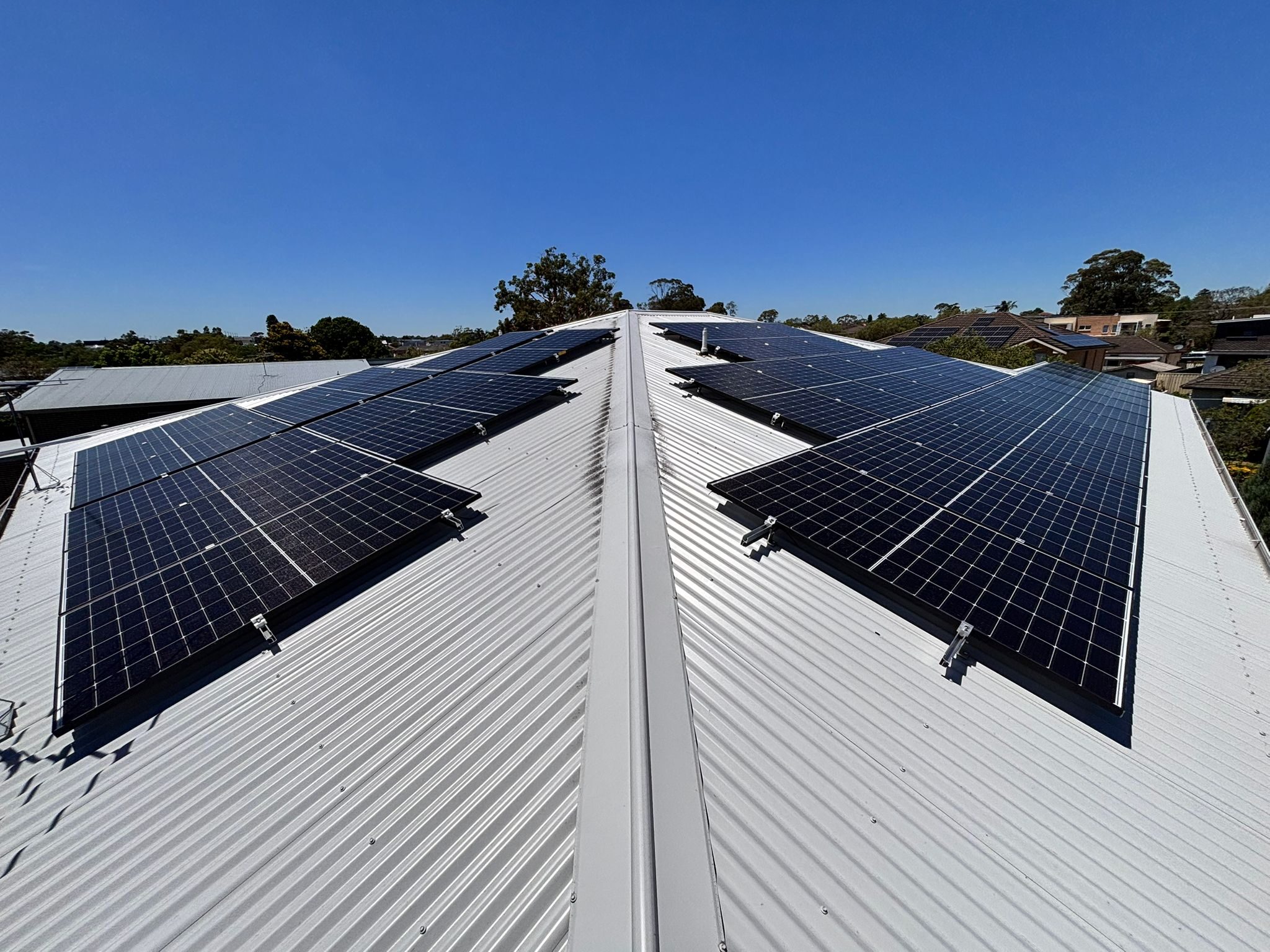
- A 6.6 kW solar system often includes around 15 to 18 panels
- A 10 kW solar system may include 24 to 28 panels
These systems can generate far more electricity than a Tesla requires for daily driving. That means homeowners can power household appliances and still have energy available for EV charging.
If you already have solar installed, you may only need minor adjustments to start charging your Tesla with solar energy. If you want to understand how your existing system can support EV charging, the team Charlie Sparks can assess your setup and recommend practical upgrades suited to your home.
Factors That Affect Solar Charging Performance
Several factors influence how efficiently solar panels charge an electric vehicle.
Panel Quality
Higher efficiency solar panels generate more electricity in the same amount of roof space. Premium panels can reduce the number of panels needed to meet your energy goals.
Location Within NSW
Sunlight levels vary slightly across the state.
Cities such as Sydney, Wollongong, and other coastal regions receive strong solar exposure. Properties with shading from trees or nearby buildings may experience lower output.
Solar Battery Storage
Battery storage systems allow homeowners to store excess solar energy during the day and use it later in the evening.
A popular option is the Tesla Powerwall, which can store solar electricity for overnight EV charging.
Feed In Tariffs
NSW households can export unused solar energy back to the grid. Feed in tariffs provide a credit on your electricity bill when your panels generate more power than your home uses.
This means your solar system can still provide financial benefits even if your Tesla is not charging during the day.
Situations Where More Panels May Be Required
Some households may require more solar panels than the estimates above. Homes with shaded roofs, east-west panel orientation, higher daily driving distances, or multiple electric vehicles will need additional generation capacity.
In these cases, a solar installer may recommend a larger system such as an 8 kW or 10 kW setup to maintain reliable EV charging while still powering household appliances.
Benefits of Charging a Tesla With Solar Panels

Pairing solar energy with electric vehicles offers several advantages for Australian homeowners.
Lower Electricity Costs
Charging a Tesla from the grid can increase electricity bills. Solar panels allow you to generate your own power and avoid purchasing electricity at peak rates.
Over time, this can lead to substantial savings.
Reduced Environmental Impact
Electric vehicles already produce fewer emissions than petrol vehicles. When charged using solar energy, they become even cleaner because the electricity comes from renewable sources.
Energy Independence
Solar systems combined with battery storage provide greater control over household energy usage. This reduces reliance on electricity retailers and protects against rising energy prices.
If you are considering solar for both your home and electric vehicle, Charlie Sparks can design a system that balances household consumption with EV charging needs.
Real Examples From NSW Tesla Owners
Across New South Wales, many Tesla owners are already pairing rooftop solar with EV charging to reduce electricity costs and improve energy independence.
A homeowner in Sydney installed a 6 kW solar system with 15 panels. The system produces enough electricity to cover household usage and daily charging for a Tesla Model 3.
Based on average NSW solar production levels, a 6 kW system typically generates around 24 to 27 kWh per day across the year, which is enough to cover both household usage and typical Tesla commuting energy.
Another household in Wollongong added a battery storage system alongside their solar panels. The battery stores excess energy during the day and powers their Tesla Model S at night. Their reliance on grid electricity dropped by more than 80 percent.
These examples show how solar systems can support both household energy and EV charging.
Getting Started With Solar EV Charging
If you want to power your Tesla with solar energy, Charlie Sparks can help. Our licensed solar electricians in NSW specialise in solar installations designed for EV charging.
Ready to Power Your Tesla With Solar?
Get a free assessment and a system built around your driving and your roof. Book with Charlie Sparks today.
Frequently Asked Questions
Can solar panels charge a Tesla directly?
Yes. Solar panels generate electricity that can be used to charge your Tesla through a home EV charger. If you charge during daylight hours, the electricity can come directly from your solar system.
How many solar panels are needed for a Tesla Model 3?
For typical daily driving of around 50 km, 5 to 8 solar panels can generate enough energy to recharge the battery usage.
Can I charge my Tesla at night using solar power?
Yes, if you have a battery storage system such as a Tesla Powerwall. The battery stores solar energy generated during the day and supplies it at night.
Is a solar battery necessary for EV charging?
A battery is not essential. Many homeowners charge their vehicles during the day while solar panels are producing electricity. Batteries simply provide more flexibility for evening charging.
Are solar panels worth it for Tesla owners in NSW?
Yes. With strong sunlight and rising electricity prices, solar panels can significantly reduce charging costs while supporting cleaner transportation.