The third and fourth things are about the equipment that sits between the panels and your home.
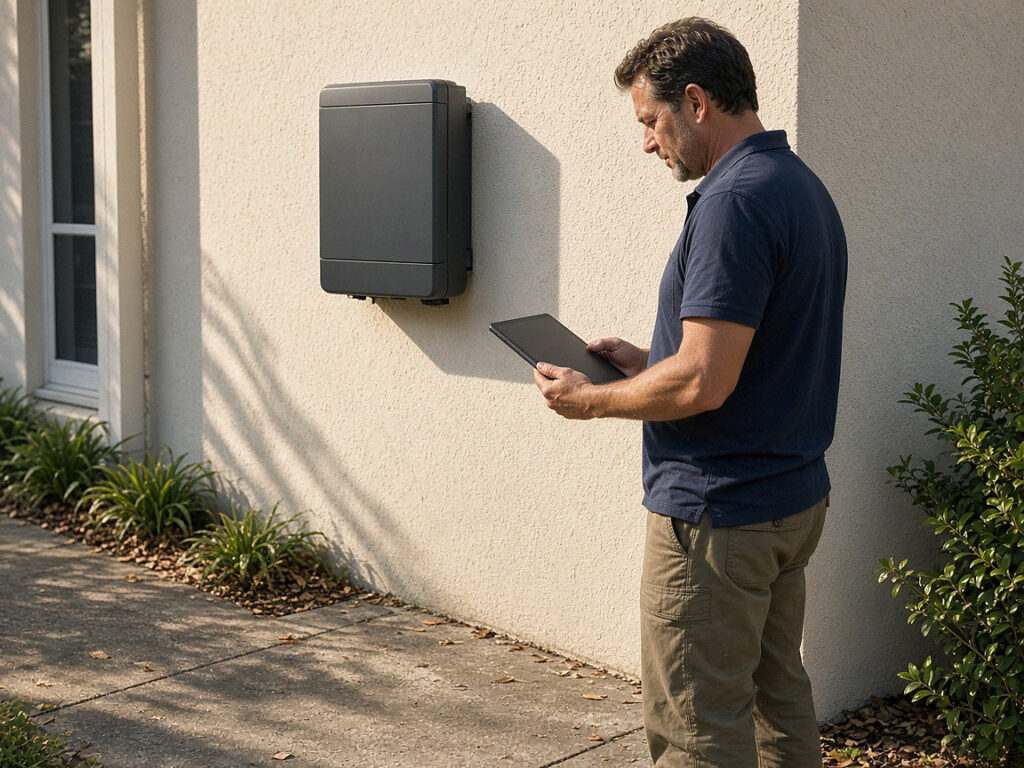
Thing three: which solar inverter is proposed
The solar inverter converts the power from the panels into power your home can use. It is one of the main parts of the system, so it deserves a clear explanation in any quote. Useful questions to ask include:
- Which type of inverter is proposed, and why does it suit my roof and household?
- Will it suit a battery if I want to add one later?
- Where will it be mounted, and is that spot sheltered?
- How will I see what the system is doing through the monitoring app?
Please do not open the inverter or change its settings. If the app or the display shows a fault, note what it says and call an electrician. For more, read the role of inverters in a home solar system.
Thing four: if a solar battery is part of the plan
A solar battery is optional. Many homes invest in panels without a battery and use the power their roof produces during the day. A battery can store unused daytime power for the evening, and it suits some households more than others, depending on how they use electricity. Backup during a blackout does not happen on its own. It depends on how the system is designed and set up, so ask about it directly.
If a battery is not right for you now, ask if the system can be set up so one can be added later. Please do not open a battery cabinet. For more, read solar panels with battery storage in Sydney and how a battery works in a solar system.
Cost and What to Check Before You Invest
The fifth thing is cost, and it goes hand in hand with reading the quote and the contract carefully.
Thing five: how cost is worked out
As a general Australian guide, a typical 6.6 kW rooftop system often costs around $5,000 to $10,000 installed, after the federal discount, including GST. Where your price sits in that range depends on several things:
- The roof type, its condition and how easy it is to reach
- The panels and the inverter proposed
- If a battery is included now or planned for later
- The cabling run and any switchboard work needed
For other system sizes, read solar panel installation cost in Sydney. Your electrician will confirm the price for your job. Call us for a free quote.
Reading the quote and picking an installer
A clear quote lists the panels, the inverter, any battery, the mounting, the installation work and what support is offered after the job. Read it and the contract carefully, and ask questions about anything that is not clear before you sign. Comparing quotes on price alone can hide real differences in design and workmanship. Look for an installer who explains the design in plain terms, visits the site before quoting and is happy to answer questions after the job. For more, read how to choose a solar installer.
Frequently Asked Questions
What are five things to know about investing in a rooftop solar power system?
Know your energy consumption, how the solar installation will be designed and fitted, which solar inverter is proposed, if a solar battery is part of the plan, and how cost is worked out for your home.
Should I look only at the price?
No. Price matters, but so do the design, the installer, the inverter, and if a battery is included. Read the quote and the contract carefully and ask questions before you sign.
Do I need a solar battery to invest in rooftop solar?
No. A battery is optional. It can store unused daytime power for later, but backup does not happen on its own, and a battery is not required for every home.
How much does a rooftop solar power system cost?
A typical 6.6 kW rooftop system often costs around $5,000 to $10,000 installed, after the federal discount, including GST. The exact price depends on your roof and the design.
Can a water heater change how I use solar?
A water heater is one household load that can often be run during the day, when the system is generating. That is a question of energy consumption, not a promise about bills.
Talk to Charlie Sparks About Investing in Rooftop Solar
Charlie Sparks is a Condell Park solar and electrical company helping homes in Bankstown, Yagoona, Bass Hill and across greater Sydney. Sydney’s Trusted Solar Installers with Solar Accreditation (SAA) for safe, quality, and on-time solar and electrical solutions. Serving New South Wales residents, businesses, and strata estates for over a decade.
Call us for a free quote.
Call Charlie Sparks on (02) 8310 4077. We are open Monday to Saturday, 7am to 6pm. Closed Sunday. You can also contact Charlie Sparks online.