Many people who say they want to go off-grid really want more control over their power. Adding energy storage to a grid-connected system can give you some of that without leaving the network.
A battery can:
- Store spare solar during the day so you can use it in the evening
- Reduce how much power you import from the grid at night
- Be designed to supply selected circuits during a blackout, if the system is set up for solar battery backup
A battery does not, by itself, make your home off-grid. The home stays connected, and the grid still covers anything the panels and battery cannot. It is also important to know that a standard grid-connected system without backup usually shuts down during a blackout for safety. Backup has to be designed in, and it usually covers chosen circuits rather than the whole home.
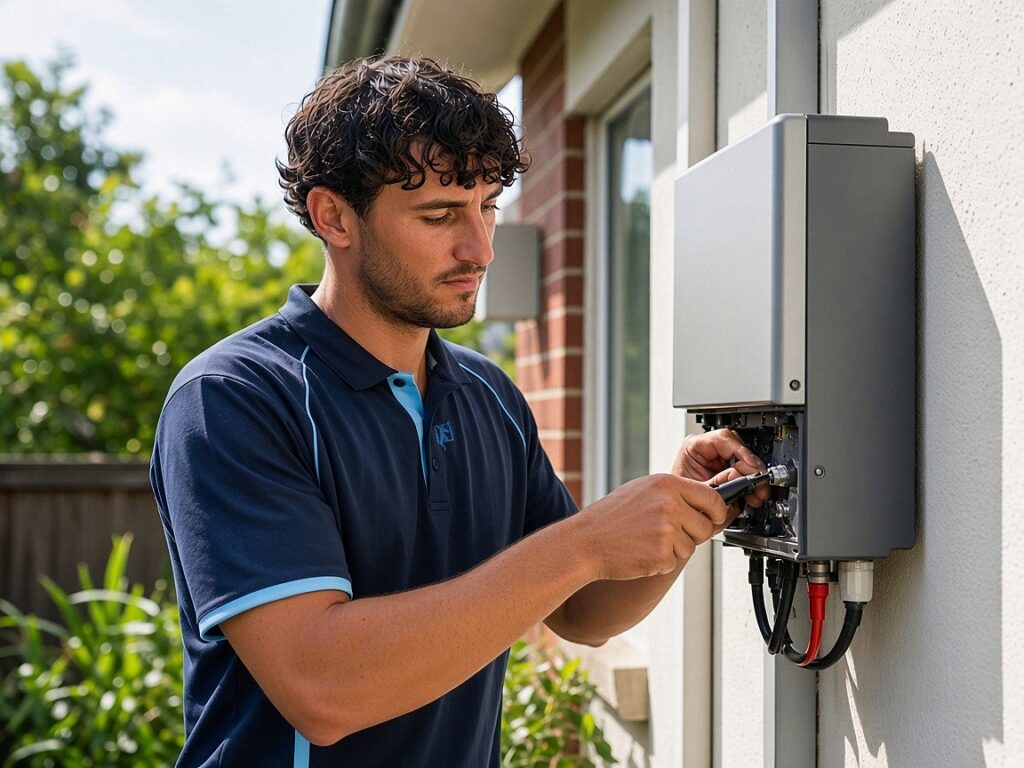
Most home batteries today use a lithium battery chemistry. On a grid-connected system with a battery, a hybrid inverter may be used to manage the panels, the battery and the grid together. The right inverter and battery depend on your system, your switchboard and what you want the battery to do.
To learn more, read about our solar batteries and our guide on what size solar battery do you need.
When an Off-Grid System Is the Right Job
A fully off-grid system makes the most sense where a reliable grid connection is unavailable, impractical or unusually expensive to bring in. That is far more common on rural and remote properties than in suburban Sydney.
An off-grid system usually needs:
- Enough panels to cover use across the seasons, including winter
- A large battery to carry the property through nights and cloudy days
- Controls to manage charging, use and protection
- Often a backup generator for long periods of poor weather
Because of the larger battery, the controls and the backup source, a fully off-grid system usually costs more than a grid-connected system for the same home. The cost depends heavily on the property, how much power it uses and how much backup it needs, so it has to be worked out from a site assessment. We do not give a typical off-grid figure, because one property can differ a great deal from the next.
Off-grid design is a specialist job. If you are weighing it up, the first step is an honest look at your property, your use and whether the grid is already available.
Which Option Suits a Typical Sydney Home
For a home in greater Sydney that already has a grid connection, the usual path is:
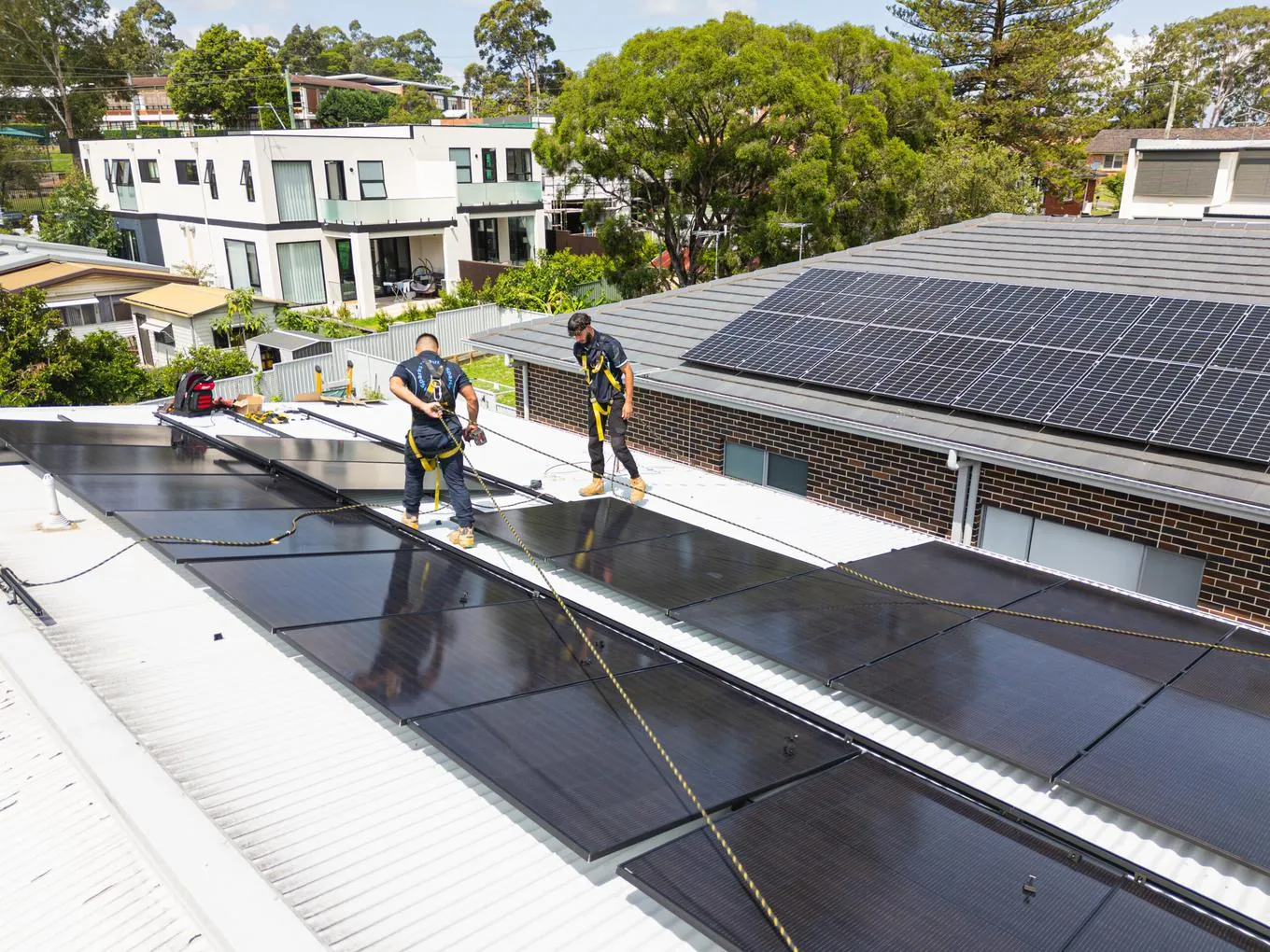
- Start with a grid-connected solar system sized to your use and roof
- Decide whether a battery makes sense for your evening use
- Decide separately whether you want backup for selected circuits in a blackout
This keeps the grid as your safety net while letting you use more of your own solar. You can read more about inverters if you are comparing setups.
If you are thinking about a battery for a grid-connected system, as a general Australian guide, a typical 10 kWh battery, installed, after the usual federal discount, including GST, often costs about $7,000 to $11,000. This is a grid-connected battery range, not an off-grid price. Your electrician will confirm the price for your job. Call us for a free quote. For more detail, read how much do solar batteries cost.
Some homes need switchboard work before solar or a battery can be added. If that applies to you, read about switchboard upgrades in Sydney.
Frequently Asked Questions
What is the difference between grid-connected and off-grid solar?
A grid-connected system works with the electricity network, so the home can draw power from the grid when the panels are not enough. An off-grid system has no network connection, so it relies on its own panels, battery and often a backup generator.
Does a battery make a system off-grid?
No. A battery stores spare solar for later use, but the home stays connected to the grid. The grid still covers anything the panels and battery cannot supply.
Will my solar work in a blackout?
A standard grid-connected system usually shuts down during a blackout for safety. A system with a battery can be designed to supply selected circuits during a blackout, but this has to be planned when the system is designed.
Is an off-grid system cheaper in the long run?
Not usually for a home that already has a grid connection. An off-grid system needs a large battery, controls and often a backup generator, so it usually costs more. Your electrician will confirm the price for your job. Call us for a free quote.
Can a typical Sydney home go fully off-grid?
It is possible, but it is rarely the practical choice for a suburban home with a reliable grid connection. Most homes are better served by a grid-connected system, with a battery and backup added if they suit the home.
Talk to Charlie Sparks About Grid-Connected Solar
Charlie Sparks is a Condell Park solar and electrical company helping homes in Bankstown, Yagoona, Bass Hill and across greater Sydney. Sydney’s Trusted Solar Installers with Solar Accreditation (SAA) for safe, quality, and on-time solar and electrical solutions. Serving New South Wales residents, businesses, and strata estates for over a decade.
Call us for a free quote.
Call Charlie Sparks on (02) 8310 4077. We are open Monday to Saturday, 7am to 6pm. Closed Sunday. You can also contact Charlie Sparks online.