Key Takeaways
- Only a handful of EV chargers are designed or built in Australia. Most home units come from Europe, the UK, New Zealand or China.
- Tritium, the best-known local name, now belongs to India’s Exicom. EVOS still builds AC chargers in Brisbane.
- JET Charge stopped selling its own ChargeMate in December 2025 but still supplies and installs other brands.
- For a home, your switchboard, solar setup and local warranty support matter more than the badge.
- Every wall charger needs a licensed electrician and its own dedicated circuit.
If you have started shopping for a home charger, you have probably noticed the same few names popping up, along with plenty of brands you have never heard of. It is not always clear who designs a charger, who builds it and who simply sells it under their own label. That difference matters when you need warranty help five years from now.
📖 People also read about:
This guide covers the Australian manufacturers worth knowing, the imported brands you will see on most sydney walls, and what we check as installers before recommending one.
Choosing an EV Charger Brand?
Tritium, JET Charge, EVSE and more – each suits different needs. Get impartial advice from Charlie Sparks.
Manufacturer, Supplier or Installer?
Three types of business show up when you search for EV chargers. A manufacturer designs and builds the hardware. A supplier imports or rebadges units and looks after warranty in Australia. An installer, like Charlie Sparks, assesses your property, runs the circuit and commissions the charger.
📖 People also read about:
Some companies do more than one of these jobs. Before you buy, ask who honours the warranty locally and where spare parts and firmware updates come from.
Australian EV Charger Manufacturers
Tritium
Brisbane-founded Tritium built its name on DC fast chargers, the large units you see at highway stops and public charging hubs. After running into financial trouble, its business and assets were bought by Indian charger maker Exicom in 2024. Tritium keeps an engineering centre in Brisbane, while production is based at a factory in Tennessee. These are commercial units, not home chargers.
EVOS
EVOS was started in Brisbane in 2020 by former Tritium staff and designs and manufactures AC chargers locally. Its SB7 is a 7kW unit for homes, and the Fleet22 is a 22kW charger aimed at businesses running vehicle fleets. Both connect to an app that can schedule charging for off-peak periods or soak up solar. EVOS hardware is sold through Ampol.
JET Charge
Melbourne-based JET Charge has worked across home, workplace and public charging since the early 2010s. It developed its own ChargeMate charger in Australia, but that model stopped being sold after 2 December 2025, with warranty still honoured for existing owners. JET Charge continues to supply and install chargers from other brands and builds larger commercial charging sites.
EVSE Australia
EVSE Australia is based in Rydalmere in Western Sydney and has supplied and installed chargers since 2014. It sells its own Ocular range alongside partner brands. It is best seen as a local supplier with its own product line, which still gives you a local warranty contact.
Imported Brands You Will See on Sydney Walls
Most home chargers installed in Australia are imported. Evnex is designed and built in Christchurch, New Zealand, and is known for its solar-matching features. You will also see Zappi from the UK, Fronius Wattpilot from Austria, Wallbox from Spain, the Tesla Wall Connector and a growing number of Chinese-made units.
💡 Need help?
We offer professional commercial ev charger installation sydney to help you achieve your goals.
Imported does not mean worse. A well-supported charger with an Australian distributor can outlast a cheap local badge with no service network. Ask the same questions of every brand: is it certified for Australian conditions, who handles warranty here, and does the app still get updates?
What Matters More Than the Brand Name
When we quote a charger install, the brand is rarely the first conversation. Our home EV charger installation process starts with your switchboard and supply, because many older Sydney homes have boards that need work before they can safely carry a charger running for hours each night.
After that, these points decide which charger suits you:
- Single-phase or three-phase: most homes run on single-phase power, which makes a 7kW charger the practical upper limit. A 22kW unit needs three-phase supply and a car that can accept it.
- Solar integration: if you have panels, a charger that follows your solar export lets the car fill up on your own power. Check that it works with your inverter.
- Tethered or socketed: a fixed cable is the easiest to live with, while a socketed unit suits households with more than one EV.
- Weather rating: carports and open driveways need a unit rated for outdoor use.
- Local support: a named Australian contact for warranty is worth more than a long warranty handled from overseas.
Pair Your Charger With Solar and a Battery
If you already have solar, charging through the middle of the day uses power you would otherwise export for a small feed-in credit. A battery can carry some of that energy into the evening, when most people plug in. As SAA-accredited solar installers, we set up the charger, inverter and battery to work together, so the car draws from your roof first and the grid second.
Why a Licensed Electrician Has to Install It
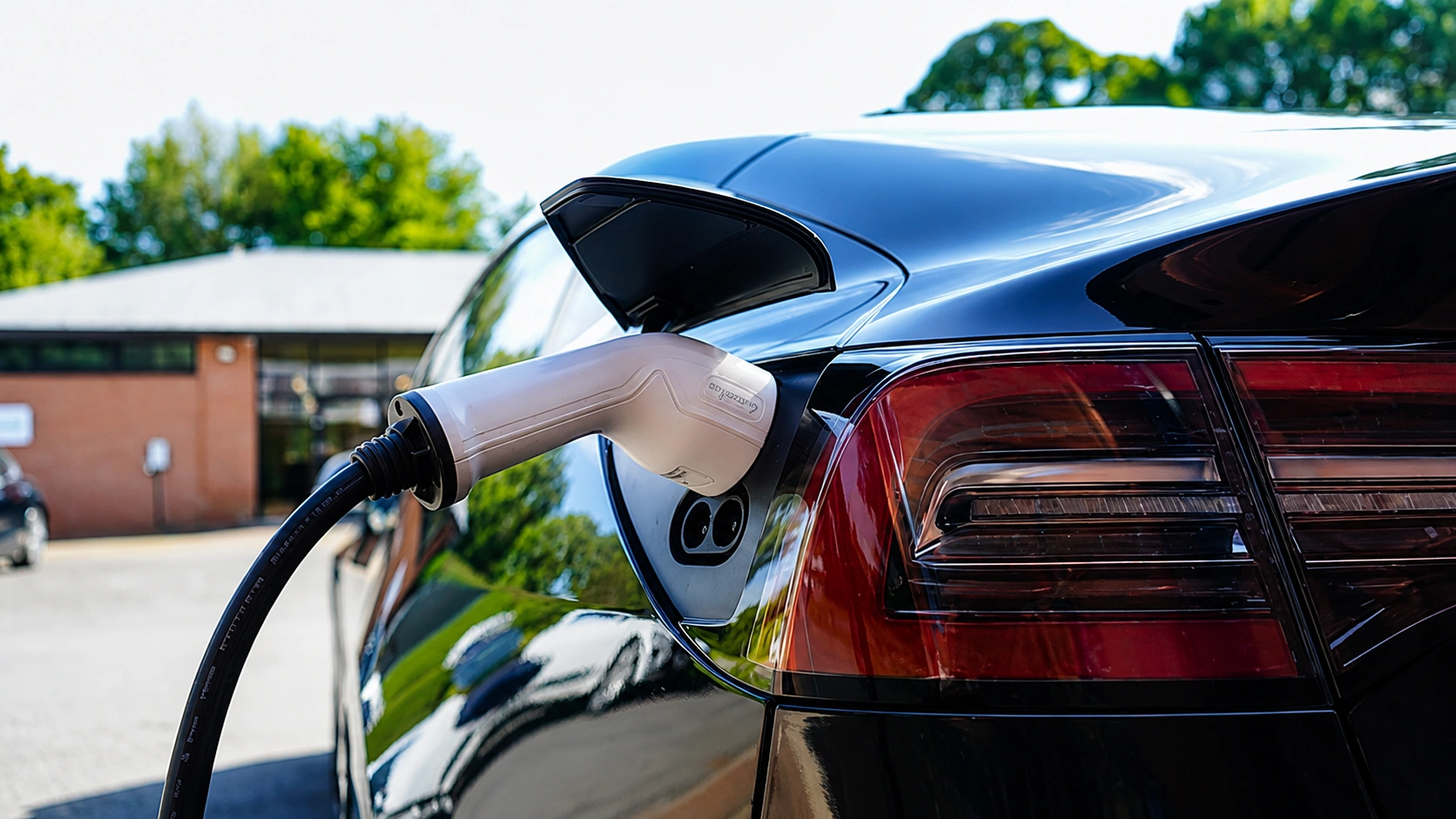
A wall charger is a permanently wired, high-load appliance, so in NSW it must be installed by a licensed electrician and certified. Our team runs a dedicated circuit with the correct RCD protection, mounts and commissions the charger, connects the app and tests everything before we leave. We install all major brands, whether you have already bought a unit or want help choosing one.
Frequently Asked Questions
Are any EV chargers made in Australia?
Yes, a small number. EVOS builds AC chargers in Brisbane. Tritium’s DC fast chargers began as Brisbane designs, though production now happens in the US under Exicom ownership.
Can I install an EV charger myself?
No. Fixed wiring work in NSW must be carried out by a licensed electrician, and the installation needs to be certified.
Will a home charger work with any EV?
Most EVs sold new in Australia use the Type 2 connector for AC charging, so a Type 2 charger suits nearly all of them. If your car is an older import, check its connector first.
Talk to a Sydney EV Charger Installer
Not sure which charger fits your home, or already bought one and need it installed? Charlie Sparks checks your switchboard, recommends a charger that suits your supply and solar, and handles the full install. Contact our team for a quote or call (02) 8310 4077.
Need Your EV Charger Installed?
Book a licensed Sydney electrician to install a charger from any major Australian brand. Talk to Charlie Sparks.